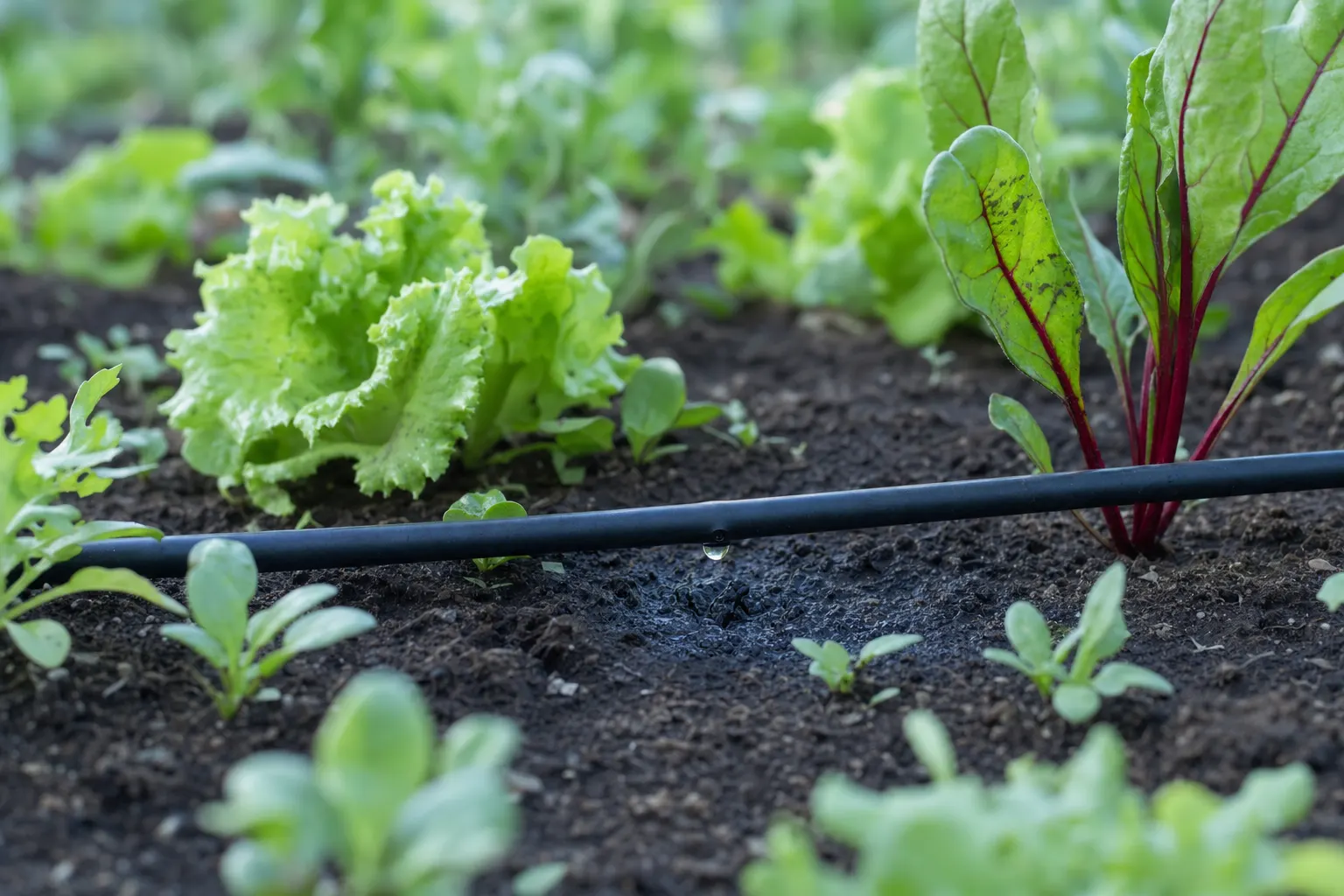
Water need is not a fixed value
“20 minutes every evening” sounds like a plan, but it is a guess. On a cool, cloudy day only a fraction evaporates of what plants lose on a hot, windy day. A fixed timer ignores that and keeps watering even after a shower. The actual need often varies several times over from one day to the next.
Three factors determine the need
1. The weather (evaporation)
Sun, temperature, wind and humidity decide how much water is drawn from the soil. Experts call this evaporation or evapotranspiration. It is calculated with the recognised FAO-56 method (Penman-Monteith), which professional agriculture uses too. Rain that has fallen is counted against it.
2. The plant
Lawn, hedge and vegetable bed have different thirsts, which the so-called crop coefficient (Kc) expresses. A frugal hedge manages with much less than a thirsty lawn in high summer. If you treat all beds the same, you are bound to water too much somewhere or too little.
3. The soil as a reservoir
Soil holds water like a sponge, and the deeper the roots reach, the larger the supply. Sandy soil stores little and needs watering more often but for shorter; loamy soil holds more and prefers rarer, more thorough doses. If you water more than the soil can take up, the rest drains away unused.
Rules of thumb waste water
Common rules of thumb (such as “20 to 30 litres per square metre and week in summer”) are fine as rough guidance, but they know neither your weather nor your soil. In practice that means either drought stress or, much more often, needlessly high use. If you instead work out how much water the soil is missing and replace only that, you water measurably less without the plants suffering.
How to use less water
- Water before sunrise, when the least evaporates before the water reaches the roots.
- Use rainwater first, for example from a cistern. It is free and contains no lime.
- Water less often but more thoroughly. That encourages deep roots and makes plants more drought-resistant.
- Give every zone what it needs. A hedge needs less than the lawn.
- Pause after rain. Rain that has fallen covers part of the need.
What that means in your garden you can work out on the home page.
Do I have to calculate all this myself?
No, Tropfwerk does this calculation. Every night it works out from the weather data how much water the soil of each zone is missing and puts that back before sunrise, with rainwater from the cistern first. How the soil stores water is shown in the interactive picture on the home page.